

call OR WHATSAPP usa / UK
+1 7045936635 | +44 7501453956



EasyFlex Pro All-in-1 Panel Stand
EasyFlex is the Pro Series evolution of the original Flexible stand design, developed to improve ergonomics, protect the turning mechanism and increase workflow flexibility in modern bodyshops.
Best suited for
- Shops that want one stand to cover most day-to-day panels without switching equipment
- Technicians who care about posture and want to reduce bending and awkward reach
- Workshops where floor space is tight and stands need to be stored flat


Single Panel Stand
Single Panel Stand: Quick Fit Check
Best suited for
- High-volume shops painting panels primarily in a vertical position
- Workflows where speed and simplicity matter more than rotation or tilt adjustment
- Teams wanting multiple economical stands to run several panels at once
In daily use
- Fast to mount and remove panels with minimal setup steps
- Holds panels upright for straightforward spraying and curing
- Designed for moving panels into the booth and through curing without complex adjustments
- Available base options support either flat storage or stacking (depending on configuration)
Overview
The Flexible Single Panel Stand is a simple, fixed-position panel stand primarily used for spraying and curing panels in a vertical or near-vertical orientation.
It is designed for practical day-to-day collision repair where a shop wants a fast, reliable stand without the additional adjustment mechanisms found on multi-process rotating stands.
Workflow Positioning
Within the Flexible Workflow System, the Single Panel Stand supports narrow vertical panels such as fenders and smaller door sections during preparation and paint work. Its role is to stabilise these panels so technicians can work efficiently without repeatedly repositioning the part.
Flexible Small Parts Module System
The Single Panel Stand is compatible with the Flexible Small Parts Module System. Modules such as the Flexible SnapGrip Module and Flexible Double Magnetic SnapGrip Module allow technicians to mount mirrors, trim and other small components alongside vertical panels.
This modular compatibility allows multiple component types to be processed within the same workstation while maintaining stable positioning during preparation and paint work.
Simple Fixed Position Workflow
Because the stand does not use a turning and locking mechanism, it is quick to deploy and easy to operate. This suits workflows where panels are painted in a consistent upright position and the technician does not need frequent angle changes.
This makes it a strong choice for shops processing many similar jobs, where speed and repeatability matter.
Best Use Cases
The stand is ideal for panels that are typically sprayed upright, and for workshops that prefer straightforward equipment with minimal moving parts.
It is generally not intended as a primary prep stand for heavy sanding access, where multi-angle positioning can be beneficial. It is most effective as a spray-and-cure stand for efficient throughput.
Base Options and Storage
The stand is available with different base configurations depending on the workshop’s storage preference:
- Options designed to store compactly when not in use
- Options designed to stack multiple stands together for high-volume workflows
Construction
The stand is Danish-engineered and manufactured for professional collision repair use, with durable construction intended to maintain function over long-term daily work.
Typical Use
The Single Panel Stand suits shops that want multiple simple stands for spraying and curing panels quickly, keeping the workflow fast and the equipment straightforward.
Jump to: Product Highlights Jump to: Parts Processed FAQ’s
SingleFlex Classic All-in-1 Panel Stand
SingleFlex represents the traditional Flexible stand design used in workshops for many years, while EasyFlex is the newer Pro Series evolution with additional functionality.

BumperFlex Classic Bumper Stand
A simple and secure bumper stand designed primarily for painting and curing. Ideal for workshops needing a reliable solution for holding bumpers during the spray and bake stages.
Compared to MultiFlex: simpler design focused on paint and curing rather than full repair positioning.

MultiFlex Pro Bumper Stand
The Pro Series bumper stand designed for full bumper repair workflow. Multi-axis positioning allows bumpers to be adjusted easily for preparation, painting and curing on a single stand.
Compared to BumperFlex: adds preparation positioning and ergonomic adjustment for complex bumper repairs.

2PoFlex Hood / Bonnet Stand
2POFlex Hood Stand: Quick Fit Check
Best suited for
- Shops painting hoods/bonnets regularly and wanting faster, cleaner access in the booth
- Technicians frustrated by center uprights and crossbars blocking gun access
- Workflows that need a simple dedicated hood stand rather than a complex multi-adjust system
In daily use
- Single upright improves access to both sides of the hood for more consistent laydown
- Two-position setup switches quickly between upright and flat working angles
- Longer hooks hold the hood away from the upright for better gun clearance
- Folding base stores flat and clears space when not in use
Overview
The Flexible 2POFlex is a dedicated hood/bonnet stand designed for painting in the spray booth. It provides clear access to the panel so the technician can spray both sides of the hood with fewer obstructions and fewer compromises in gun angle.
When hoods are held on general-purpose stands, uprights and crossbars can block access and force the painter to work around the stand instead of focusing on the finish. The 2POFlex uses a single upright and longer hood hooks to keep the panel accessible for a cleaner, more controlled spray process.
Access and Paint Finish
The stand’s single upright design reduces the amount of structure in the painter’s way, improving reach and visibility across the hood.
The hood is held slightly further from the upright on longer hooks, which increases clearance for the spray gun and makes it easier to maintain consistent distance and angle across edges and returns.
Two Working Positions
“2PO” refers to the two working positions of the stand.
- Upright position for spraying the underside/rear of the panel
- Flat position for spraying the top/outside of the panel
This keeps setup simple and fast while still giving the painter the practical angles needed for booth work.
Workflow and Booth Movement
The 2POFlex is designed as a booth-focused tool that can be moved as needed across the workshop and into the spray area.
Durable hard rubber wheels roll smoothly and are resistant to punctures, helping the stand move reliably around busy bays and over workshop debris.
Storage and Space Saving
The stand includes a folding base so it can store flat when not in use. This helps reduce footprint in busy workshops and keeps floor space clear between jobs.
Construction
The 2POFlex is Danish-engineered and manufactured for professional collision repair use. It is built from durable nickel-plated steel for corrosion resistance and long-term reliability in daily shop conditions.
Typical Use
The 2POFlex suits shops that want a dedicated hood/bonnet painting stand that is fast to set up, simple to use, and designed around one main priority: clean access for a better finish.
Jump to: Product Highlights Jump to: Parts Processed FAQ’s
FlexTree Pro Small Parts Stand
- Paint more small parts per booth cycle without cluttering the floor space.
- Hold parts safely so they don’t get lost, dropped, or damaged between prep and paint.
- Better spray angles: remove individual holders and paint parts in-hand at any angle for a cleaner finish.
The FlexTree Pro stand is a compact, small-parts workstation that keeps mirrors, trims, caps, handles and similar pieces organised and protected while you process panels.
Instead of taping parts to benches or hanging them on wire at one fixed angle, you can lift each holder off the tree, spray at the best angle, then place it back securely.

Trim Spoiler & Mirror Kit Module
Trim, Spoiler & Mirror Kit: Quick Fit Check
For holding spoilers, mirrors, petrol-caps, door handles and some bumpers etc, if fitted with male or female threads. The spoiler kit consists of 4 stainless steal rods with 4,5,6 & 8mm male and female threads, a self-tapper for glue on spoilers, and 2 brackets for holding the rods at any angle.Best suited for
- Painting mirrors, spoilers and exterior trim pieces off the vehicle
- Technicians struggling to safely secure lightweight plastic parts
- Workshops wanting full access to both visible and hidden surfaces
In daily use
- Holds trim parts without taping or wiring them
- Allows the part to be rotated and angled while spraying
- Prevents parts falling or being touched during painting
- Keeps small visible parts protected during curing
Overview
Exterior trim components such as mirrors and spoilers are often some of the most visible parts on a repaired vehicle. However, they are also among the most difficult parts to secure safely during painting.
Without a proper mounting point, technicians typically tape, wire or balance these parts. This restricts spray access and increases the risk of touching, dropping or damaging the freshly painted surface.
Workflow Positioning
Within the Flexible Workflow System, this kit provides dedicated mounting points for mirrors, spoilers and trim components. These parts can be processed alongside larger panels while remaining securely mounted.
Controlled Holding
The Trim, Spoiler & Mirror Kit attaches directly to Flexible stands and provides secure mounting points specifically shaped for small exterior components. The part remains stable while still allowing full access around the panel.
Because the part is mounted to the stand, it moves with the stand. The technician can rotate and position the component to maintain a correct spray angle across all surfaces.
Paint Access
Many trim components must be painted on multiple sides. Holding the part by hand or securing it to a bench forces the painter to spray at poor angles.
Mounted on the stand, the part can be repositioned instead of the painter repositioning themselves. This improves coverage and reduces handling between coats.
Typical Use
The kit is used when small exterior parts must be painted off the vehicle but still require safe mounting and controlled positioning throughout the paint process.

Motorcycle Kit Module
Motorcycle Kit: Quick Fit Check
Best suited for
- Painting motorcycle tanks, fenders and similar shaped parts
- Holding curved or irregular components securely
- Workshops repairing motorcycles or specialty vehicles
In daily use
- Secures curved panels without balancing them
- Allows full spray access around the part
- Rotates the component during painting
- Reduces risk of touching fresh paint
Overview
Motorcycle components differ significantly from automotive panels. Tanks and fenders are curved, narrow and difficult to support using standard panel stands.
When unsupported, they are often held by hand, hung on wire or balanced on benches. This restricts access and creates high risk of handling damage.
Workflow Positioning
Within the Flexible Workflow System, the motorcycle kit allows stands to support motorcycle components such as tanks, fenders and wheels. This extends the same workflow principles used for automotive panels to motorcycle refinishing work.
Secure Positioning
The Motorcycle Kit attaches to Flexible stands and provides mounting points suited to narrow and curved components. The part remains stable while still allowing rotation and repositioning.
The technician can move the part instead of moving around it, allowing proper paint angle across the entire surface.
Typical Use
The kit is used whenever motorcycle parts or similarly shaped components must be painted off the vehicle while maintaining safe handling and controlled positioning.
Once you have tried it and experienced its benefits you'll never want to be without it.
Parts Processed: Motorcycle Rims, Fenders and Petrol / Gas Tanks
Double Snap-Grip Module
Double Snap Grip: Quick Fit Check
Best suited for
- Holding multiple small parts at once
- Increasing stand capacity
- Processing parts in batches
In daily use
- Provides two mounting points
- Allows painting multiple parts simultaneously
- Reduces setup time
- Improves workflow efficiency
Overview
When several small components must be painted together, technicians often lack enough secure mounting points. This causes repeated setup and handling.
Dual Mounting
The Double SnapGrip attaches to Flexible stands and provides two independent holding positions, allowing multiple parts to be mounted and painted during the same cycle.
Typical Use
Used when several small components must be processed at once without placing them on work surfaces.

Double Snap-Grip Module (Magnetic)
Double Magnetic Snap Grip: Quick Fit Check
Our Magnetic Snap Grip Tool effortlessly holds small auto body parts in need of painting, ensuring easy access and helping to produce a smooth and precise application. No more worrying about parts slipping or falling off! Featuring a magnetic base, this tool securely attaches to any metallic surface, providing a stable and reliable grip. The snap-grip head firmly holds the auto body parts in place, preventing unwanted movement and allowing you to work with ease.Best suited for
- Fast mounting of multiple small parts
- High throughput work
- Reducing repeated setup
In daily use
- Two quick mounting positions
- Allows rapid repositioning
- Prevents parts resting on benches
- Supports batch painting
Overview
Painting multiple small components typically requires repeated setup and repositioning. Improvised holding increases handling time and damage risk.
Dual Quick Mount
The Double Magnetic SnapGrip provides two rapid attachment points, allowing multiple components to be secured and processed together.
Typical Use
Used when several small parts must be mounted quickly and painted in the same cycle.


Felgenhalter-Werkzeug
€55.00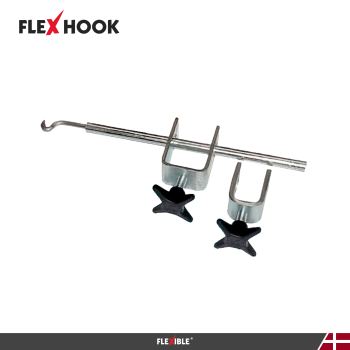
Flex Hook
€35.00Flex Hook: Quick Fit Check
Best suited for
- Shops mounting doors, fenders and irregular panels on stands
- Technicians needing more adjustment when positioning panels
- Workshops wanting better access around panels during preparation and painting
In daily use
- Allows panels to sit further away from the stand frame
- Adjusts quickly to match different panel shapes and sizes
- Improves access around the panel during prep and paint
- Attaches to Flexible stands as a simple extension hook
Overview
The Flexible Flex Hook is an adjustable panel support hook designed to extend the mounting position of panels on Flexible stands.
When panels are mounted close to the stand frame, access can be restricted. Lower edges or corners may sit too close to the stand structure, forcing the technician to work around the stand instead of the panel.
The Flex Hook allows the panel position to be adjusted outward so the panel sits at the correct distance from the stand.
Workflow Positioning
Within the Flexible Workflow System, the Flex Hook provides a mounting point for supporting panels on Flexible stands. It allows technicians to suspend panels securely during processing stages.
Adjustable Panel Position
Different vehicles and panel shapes require different mounting positions. A door, fender or quarter panel may extend further away from the stand depending on its shape.
The Flex Hook provides adjustable reach so the panel can be mounted securely while still maintaining the correct working distance from the stand frame.
Improved Access During Work
By moving the panel further away from the stand, the technician gains better access around edges and surfaces.
This makes sanding, preparation and painting easier because the stand structure is less likely to obstruct the working area.
Compatible with Flexible Stands
The Flex Hook attaches to Flexible stands and integrates into the panel mounting system used across the range.
This allows technicians to configure the stand depending on the panel type being processed.
Typical Use
The Flex Hook is used when panels require additional distance from the stand to achieve proper positioning and working access.
It helps technicians mount panels more accurately and maintain better access during preparation and painting.

Single Snap-Grip Module (Magnetic)
Magnetic SnapGrip: Quick Fit Check
Best suited for
- Holding small components quickly
- Fast mounting without clamps or tape
- Painting small removable parts
In daily use
- Attaches instantly to the stand
- Holds small parts securely
- Allows repositioning during painting
- Prevents parts from being placed on work surfaces
Overview
Small removable vehicle components are often difficult to secure safely while painting. Improvised mounting methods restrict access and risk damaging fresh paint.
Magnetic Mounting
The Magnetic SnapGrip provides a fast attachment point on the stand, allowing small components to be secured and repositioned easily throughout the painting process.
Typical Use
The tool is used when small parts must be painted off the vehicle and need quick, repeatable mounting without complex setup.

Snap Grip Module
SnapGrip: Quick Fit Check
Best suited for
- Holding small parts during painting
- Securing lightweight components quickly
- Adding extra holding points to any Flexible stand
In daily use
- Clips parts directly onto the stand
- Allows the part to rotate with the stand
- Prevents parts being laid on benches
- Reduces handling between coats
Overview
Small automotive parts are often painted separately from the vehicle. Without proper mounting they are placed on benches, taped or held by hand.
This limits access and increases the chance of touching or damaging fresh paint.
Direct Attachment
The SnapGrip attaches directly to Flexible stands and provides a quick mounting point for small components. The part remains secure while still accessible from multiple angles.
Typical Use
The SnapGrip is used to add additional mounting capacity to a stand so multiple small parts can be processed alongside panels or bumpers.

Squeeze-Out Module
Squeeze-Out: Quick Fit Check
Best suited for
- Holding hollow components from the inside
- Painting mirror housings and similar parts
- Parts that cannot be clamped externally
In daily use
- Expands inside the part
- Holds without touching the exterior surface
- Allows full paint access
- Prevents handling damage
Overview
Some components cannot be safely clamped from the outside because the painted surface would be damaged or inaccessible.
Internal Holding
The Squeeze-Out expands outward inside the component. Instead of clamping the exterior, it holds the part from the inside walls, leaving the exterior completely accessible for painting.
Typical Use
Used when parts such as mirror housings or hollow components must be painted without external contact.
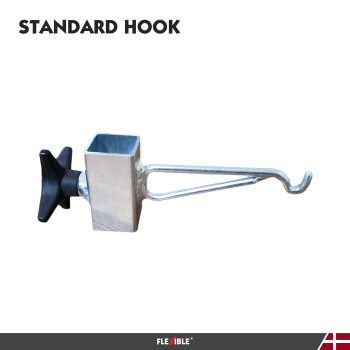
Standard Hook
€35.00Standard Hook: Quick Fit Check
Best suited for
- Replacing worn or missing hooks on Flexible panel stands
- Workshops maintaining EasyFlex or SingleFlex stands
- Technicians needing reliable panel mounting during prep and paint
In daily use
- Securely holds panels during preparation and painting
- Maintains proper panel position on the stand
- Replaces damaged or worn hooks quickly
- Restores normal stand functionality without replacing the whole stand
Overview
The Flexible Standard Hook is the original mounting hook used across several Flexible panel stands including the EasyFlex and SingleFlex. It serves as the primary contact point that supports panels during preparation and painting.
Panel stands rely on simple but reliable mounting points to hold doors, fenders and other panels securely. If hooks become damaged or worn, the panel may no longer sit correctly on the stand.
Workflow Positioning
Within the Flexible Workflow System, the standard hook provides the basic mounting point used to support panels on Flexible stands. It allows panels to be positioned securely while technicians carry out preparation and refinishing work.
Panel Mounting Function
The standard hook provides a stable mounting point so panels can be positioned safely on the stand during repair, preparation and painting work.
It is designed to support the panel without interfering with working access around the surface.
Stand Maintenance
Because hooks are the main contact point with panels, they may occasionally require replacement after long-term workshop use.
Replacing a worn hook restores proper panel positioning and ensures the stand continues to function correctly.
Compatible Flexible Stands
The Standard Hook is designed for use with Flexible panel stands such as the EasyFlex and SingleFlex, matching the original mounting system supplied with the equipment.
Typical Use
The Standard Hook is typically used as a replacement component to maintain the panel mounting system on Flexible stands.
It ensures panels can continue to be mounted securely during preparation and painting work.
Wheel Rim Holder Module
Wheel Rim Holder: Quick Fit Check
Best suited for
- Painting wheel rims off the vehicle
- Accessing both sides of the rim
- Secure rim mounting
In daily use
- Mounts the rim from the center
- Allows full access to outer surfaces
- Rotates with the stand
- Prevents laying rims on surfaces
Overview
Wheel rims are difficult to paint when resting on benches or hung on improvised supports. Access to all sides is limited and handling damage is common.
Workflow Positioning
Within the Flexible Workflow System, the wheel rim holder secures rims from the centre hub so technicians can access the full outer surface during refinishing work. This stabilises the wheel while allowing unobstructed access.
Center Mounting
The Wheel Rim Holder secures the rim through the center opening. The outer painted surfaces remain fully accessible while the rim can be rotated and repositioned.
Typical Use
Used whenever rims must be painted off the vehicle with full access and controlled handling.

Wheel Rim Cart
Wheel Rim Cart: Quick Fit Check
Best suited for
- Workshops repairing or repainting multiple wheels
- Technicians moving wheels between prep, booth and storage
- Shops wanting safer handling of finished rims
In daily use
- Moves several rims at once without carrying
- Prevents scratches on freshly painted wheels
- Keeps wheels organised during repair workflow
- Reduces lifting and handling strain
Overview
Wheel repair work often requires rims to be moved repeatedly between removal, preparation, painting and curing. Without proper handling equipment, wheels are carried by hand or stacked on the floor, which risks damage and increases technician strain.
The Wheel Rim Cart provides a dedicated transport and staging solution that keeps rims organised and protected throughout the repair process.
Workflow Positioning
Within the Flexible Workflow System, the wheel rim cart allows rims to be transported and staged safely between preparation and refinishing areas without unnecessary lifting.
Safe Handling
Rims are sensitive to contact after preparation or painting. Placing them on the floor or leaning them against surfaces can easily scratch coatings or contaminate surfaces before curing.
The cart supports the wheels in stable positions so they can be moved without touching each other or contacting workshop surfaces.
Workflow Movement
The cart allows multiple wheels to be transported together between work areas such as preparation bays, spray booth and curing area.
This reduces repeated trips and prevents technicians from carrying heavy wheels across the workshop.
Technician Protection
Manual carrying of wheels places strain on the back, shoulders and hands, especially when processing multiple vehicles in a day.
Using the cart reduces lifting and allows controlled movement through the shop, improving safety and reducing fatigue.
Typical Use
The Wheel Rim Cart is used to transport and stage wheels safely during collision repair or refinishing, keeping them protected while maintaining an organised workflow.
◦ Danish Engineered ◦ 360 Degree Rotation ◦ Adjusts Vertically (up /down) ◦ Industrial Rubber Wheels ◦ One-Handed operation ◦ Electrogalvanized Nickel Plated Precision Steel Construction Parts Processed: Wheel Rims, All small parts with additional attachments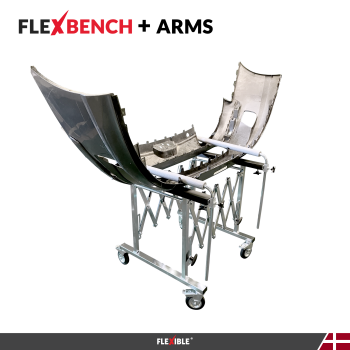
FlexBench Pro
FlexBench: Quick Fit Check
Best suited for
- Shops repairing damaged panels before painting
- Technicians sanding, filling or shaping doors, bumpers and large panels
- Workshops needing stable support for preparation work
In daily use
- Panel stays stable during sanding and filler work
- Bench length adjusts to match panel size
- Reduces panel movement while repairing damage
- Creates a controlled preparation stage before moving to a paint stand
Overview
The Flexible FlexBench is an adjustable repair and sanding workstation designed for the preparation stage of collision repair. Its extending concertina design allows the bench length to be increased or reduced so the support matches the panel being repaired.
Technicians often repair panels on fixed benches, trestles or improvised supports. When the panel overhangs the support it shifts during sanding and filling, which makes accurate repair difficult and increases the risk of damage.
Workflow Positioning
Within the Flexible Workflow System, the FlexBench Pro supports the repair and preparation stages of collision repair. Panels such as doors, fenders and hoods can be repaired and sanded on a stable working surface before moving to a Flexible stand for refinishing and curing. This separation of tasks reduces unnecessary handling and allows each workstation to support a specific stage of the workflow.
Flexible Small Parts Module System
The FlexBench Pro can also be used alongside the Flexible Small Parts Module System, allowing modules such as the Flexible SnapGrip Module, Flexible Squeeze-Out Module and Flexible Trim, Spoiler & Mirror Kit Module to be mounted while panels are being repaired or prepared.
This modular capability allows technicians to stabilise both large panels and smaller components at the same workstation during the repair and preparation stages of collision repair.
Adjustable Length Support
The FlexBench expands and contracts to support panels of different sizes. Smaller parts can be held securely while large panels such as doors, tailgates and bumpers can be supported across their length.
Because the support matches the panel, the technician can work on the repair instead of stabilising the part.
Optional Panel Support Arms
Optional support arms allow panels to be mounted rather than simply resting on the bench surface. This is especially useful when sanding edges or shaping filler areas.
The panel remains secure and does not shift while pressure is applied during sanding or repair.
Repair Accuracy
Filler shaping and sanding require a stable panel. If the panel flexes, the repaired surface becomes uneven and may require rework.
The FlexBench supports the panel evenly so it does not rock or move, allowing accurate sanding and shaping before painting.
Workflow Position
The FlexBench is intended for the repair and preparation stage only. Panels are repaired and sanded on the bench and then transferred to a Flexible stand for painting and curing.
This separation keeps paint stands clean and allows each workstation to perform a specific role in the repair process.
Ergonomics
Holding or stabilising a panel while repairing it forces awkward body positioning. A supported panel allows the technician to work in a more natural posture and reduces fatigue.
Construction
The FlexBench is Danish-engineered for daily collision repair use. The expanding structure is designed to handle repeated adjustment and panel handling during preparation work.
Typical Use
The FlexBench suits workshops that want a dedicated preparation workstation for sanding and repair before moving panels to paint equipment.
It provides a stable platform for repairing panels accurately before they progress to the paint stage.

N-table
N-Table: Quick Fit Check
A durable and versatile sanding table. with 4 independent adjustable arms to cater for a large range of panels, bumpers and small parts. It's unique design it is especially good for securing bumpers as well as doors and hoods.Best suited for
- Shops repairing damaged panels before paint
- Technicians doing filler work, straightening or plastic repair
- Workshops needing a stable working platform rather than a painting stand
In daily use
- Holds panels securely during sanding and repair
- Allows pressure work without the panel moving
- Gives full access to edges and damaged areas
- Reduces the need to work on the floor or improvised benches
Overview
The Flexible N-Table is a dedicated repair and preparation work table designed to support panels during sanding, filling and structural repair before the paint process begins.
Many workshops attempt repair work using panel stands or improvised benches. These supports are designed to hold panels lightly for painting, not to withstand pressure from sanding, pushing or shaping. As a result the panel moves, the repair becomes inconsistent and technicians often work in uncomfortable positions.
The N-Table provides a stable platform specifically intended for repair operations rather than painting.
Stable Repair Platform
The table supports panels across a broad contact area, allowing technicians to apply pressure during sanding, filler shaping and plastic repair without the part shifting or vibrating.
This stability improves repair accuracy and helps maintain correct panel shape before the painting stage.
Access to Damaged Areas
Because the panel is supported rather than suspended, the technician can reach edges, corners and damaged sections easily. The panel can be positioned securely while still leaving working access where repair is needed.
This is especially useful when repairing dents, sanding filler or correcting previous damage where controlled pressure is required.
Workshop Ergonomics
Without a proper repair table, technicians often work on the floor or on unsuitable benches. This leads to bending, kneeling and unstable working positions.
The N-Table allows repairs to be performed at a practical working height, improving control and reducing physical strain during longer repair tasks.
Workflow Role
The N-Table is not intended for spraying or curing. Instead it serves as the preparation and repair stage before panels move to a painting stand such as the EasyFlex or SingleFlex.
By separating repair work from painting supports, the workflow becomes more controlled and panels are less likely to be damaged before entering the booth.
Construction
The N-Table is Danish-engineered and manufactured from durable materials designed for daily collision repair use. It is built to withstand repeated sanding pressure and repair work that would quickly wear lighter supports.
Typical Use
The N-Table suits workshops that regularly repair damaged panels and need a stable platform for preparation work before painting.
It is intended to create a proper repair stage in the workflow so panels can be corrected accurately before moving to the paint process.
◦ Danish Engineered ◦ Vertically (up/down) ◦ Word Shelf (bottom) ◦ 4 Independent adjustable arms ◦ Industrial Rubber Wheels ◦ Electrogalvanized Nickel Plated Stainless Steel Construction Parts Processed: Most panels, Most bumpers, Small parts (using the separate small parts attachments)
Sanding Table
Sanding Table: Quick Fit Check
Best suited for
- Workshops repairing panels before painting
- Technicians tired of sanding panels on trestles, benches or improvised supports
- Shops wanting a stable platform before moving panels onto stands
In daily use
- Holds panels securely during sanding and filling
- Reduces panel movement and vibration during prep work
- Allows comfortable working height and body position
- Prepares panels safely before transferring to a paint stand
Overview
The Flexible Sanding Table is a dedicated preparation workstation designed for the repair and sanding stage before painting. It provides a stable support surface so panels can be filled, blocked and prepared correctly before being mounted onto a paint stand.
Many workshops sand panels on improvised benches, saw horses or unstable supports. This causes panels to move during sanding, leads to uneven filler work and increases the risk of scratches or accidental damage. The sanding table is designed to give controlled support during the repair stage so the surface can be prepared properly.
Workflow Positioning
Within the Flexible Workflow System, the sanding table supports the preparation stage of collision repair. Panels can be sanded and prepared on a stable work surface before moving to stands for painting.
Flexible Small Parts Module System
The Sanding Table can also be used alongside the Flexible Small Parts Module System. Modules such as the Flexible SnapGrip Module and Flexible Squeeze-Out Module allow smaller components to be mounted while panels are being prepared.
This modular capability allows technicians to prepare both large panels and smaller parts within the same workstation.
Stable Panel Support
During sanding and filling, panels are subjected to pressure and vibration. If the panel shifts while being worked, filler work becomes uneven and sanding marks become inconsistent.
The sanding table supports the panel across a broad area, preventing movement while the technician blocks or sands. This allows more accurate surface preparation and reduces the need for rework later in the process.
Preparation Before Painting
The table is intended to be the stage before the paint stand. Repairs, filler shaping and surface preparation are completed on the table, after which the panel can be transferred directly to a Flexible stand for priming and painting.
This separates the repair stage from the painting stage, keeping paint stands cleaner and allowing each workstation to be used for its proper task.
Ergonomics and Working Position
Sanding and filling require sustained pressure and repetitive motion. Working on low benches or unstable supports forces poor posture and increases fatigue.
The sanding table places the panel at a practical working height, allowing the technician to work with controlled body positioning and reducing strain during long preparation work.
Workflow Efficiency
By giving a dedicated repair workstation, the sanding table prevents paint stands from being used for heavy prep work. This keeps paint equipment cleaner and allows panels to move through a logical workflow: repair, prep, paint and curing.
The result is a more organised workshop and fewer interruptions during the painting process.
Construction
The sanding table is Danish-engineered and manufactured from durable steel designed for daily professional collision repair use. It is built to withstand repeated sanding pressure and frequent panel handling.
Typical Use
The sanding table suits workshops that want to prepare panels correctly before painting and avoid using painting equipment for heavy sanding operations.
It functions as the preparation stage of the workflow, allowing panels to be repaired and shaped properly before being mounted onto a paint stand for finishing.

Wall Bumper Rack
Wall-Mounted Bumper Rack: Quick Fit Check
Best suited for- Workshops storing painted or repaired bumpers safely
- Busy body shops needing to free floor space
- Protecting bumpers between repair stages
- Keeps bumpers off the floor and away from traffic
- Folds flat when not in use
- Stores multiple bumpers without stands
- Reduces accidental damage during handling
Overview
After removal or painting, bumpers often have nowhere safe to go. They are commonly leaned against walls, placed on benches or left on stands, where they can easily be knocked, scratched or contaminated. The Wall-Mounted Bumper Rack provides a dedicated storage location that protects the bumper while freeing valuable workshop space.Workflow Positioning
Within the Flexible Workflow System, the wall bumper rack provides organised storage for bumper covers between repair stages. Keeping bumpers elevated and separated protects finished surfaces while maintaining an organised workflow.
Space Saving Storage
The rack mounts directly to the wall, eliminating the need for floor-standing supports. Because it does not require feet or a base, it keeps the workshop floor clear for vehicles and technicians. Each arm can be folded independently, allowing only the needed positions to be opened while the rest remain flat against the wall.Protection Between Stages
Collision repair workflows often require panels to wait between repair, preparation and painting. Without secure storage, bumpers are vulnerable to accidental contact. The rack holds bumpers elevated and stable, reducing the chance of damage and keeping freshly prepared or painted parts away from workshop traffic.Typical Use
The Wall-Mounted Bumper Rack is used to safely store removed, repaired or painted bumpers between workflow stages while maintaining clear and usable floor space. ◦ Space Saving ◦ Nickel-plated Steel Construction ◦ 4 Bumper Capacity ◦ Wall Mounted ◦ Folds Away Flat ◦ Danish EngineeredFlexible paint stands have been designed and manufactured by FK Teknik in Demark for over 40 years. The whole process from cutting the steel to the completed product happens in the FK Teknik factory. There is no outsourcing or third party overseas contractors, each paint stand, rack or small parts tool is 100% Danish made to ensure the highest quality.
Build QualityThe precision-cut steel used to make each product is nickel-plated using electrogalvanization. This process makes the steel both rust and scratch-resistant making it ideal for use in auto body shops and one of the reasons why Flexible paint stands last 2 to 3 times longer than there competitors.
Designed for Efficiency & ProfitabilityAs well as been second to none in regards to build quality, Flexible auto body equipment has been specifically designed to increase your body shops efficiency and productivity. There are a whole host of small refinements which have been developed over the past 40 years to make each piece of equipment an investment and an essential tool in increasing your body shops profitability.